Why Radiation Management Has Become a Central Focus in C-Arm Imaging Decisions

Why Radiation Management Has Become a Central Focus in C-Arm Imaging Decisions
Radiation management is no longer a secondary consideration in C-Arm imaging—it has become a central theme in clinical research, facility planning, and purchasing decisions across healthcare environments.
As procedural volumes increase and fluoroscopy is used more frequently across service lines, healthcare organizations are paying closer attention to how imaging systems manage radiation exposure for both patients and staff. This shift is evident in academic research, professional guidelines, and the questions facilities are actively asking when evaluating C-Arms today.
What’s Driving the Focus on Radiation Management
Increased Use of Fluoroscopy Across Care Settings
C-Arms are now integral to a wide range of procedures, many of which involve repeated or prolonged fluoroscopic imaging. As utilization rises, so does cumulative radiation exposure—making dose management a practical concern rather than a theoretical one.
Facilities are increasingly aware that even modest reductions per case can have meaningful long-term impact on occupational exposure for clinicians and technologists who work with fluoroscopy daily.
Growing Awareness of Occupational Exposure
Research and professional discourse continue to highlight the long-term risks associated with repeated low-level radiation exposure. As a result, healthcare organizations are placing greater emphasis on protecting the clinical teams who rely on imaging every day, not just meeting minimum compliance standards.
Radiation management is now viewed as part of workforce sustainability—supporting staff safety, retention, and long-term well-being.
Shift from Compliance to Sustainability
Historically, radiation safety discussions focused on compliance with regulations and reporting requirements. Today, facilities are moving beyond compliance toward sustainable imaging practices.
This includes evaluating whether imaging systems:
- Support consistent low-dose operation
- Reduce unnecessary beam-on time
- Minimize retakes through better image quality
- Encourage safer imaging behavior through design and workflow
What Facilities Are Looking for in Modern C-Arm Systems
Rather than asking for “the lowest dose possible,” facilities are increasingly focused on how dose is managed in real-world use.
Key areas of interest include:
- Intelligent dose control, such as pulsed fluoroscopy and dynamic exposure adjustment
- Advanced image processing, including real-time noise reduction that maintains clarity at lower dose levels
- Improved collimation tools, which limit radiation to the area of interest
- Workflow efficiency, reducing the need for repeated exposures caused by repositioning or poor visualization
In practice, facilities recognize that radiation management is as much about system behavior and workflow as it is about hardware specifications.
The Role of Technology and Workflow Together
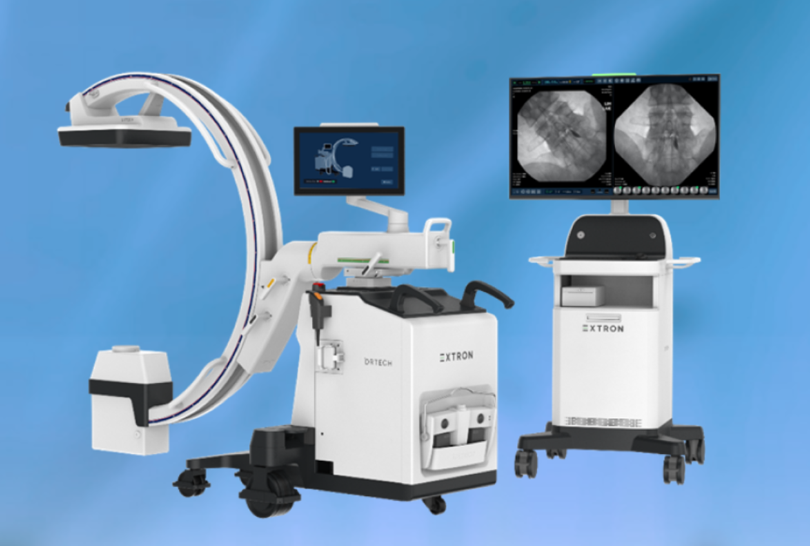
Modern C-Arms are designed with digital imaging architectures that integrate detector technology, image processing software, and user interface design. When these elements work together effectively, they allow clinicians to maintain image confidence while using less radiation.
Equally important is workflow. Systems that are easier to position, faster to adjust, and more intuitive to operate help reduce the likelihood of unnecessary exposure caused by delays, retakes, or manual corrections.
How This Impacts Purchasing Decisions
Radiation management has become a differentiator when facilities compare C-Arm options—both new and refurbished. Buyers are increasingly asking:
- How does this system support low-dose imaging in everyday use?
- Does it reduce reliance on manual adjustments?
- Will it help standardize safer imaging practices across teams?
These questions reflect a broader shift toward value-based imaging decisions, where safety, efficiency, and long-term impact are weighed alongside image quality and cost.
Pulse ISM’s Perspective
At Pulse ISM, we see radiation management as a shared responsibility between technology and thoughtful system selection. Our role is to help facilities evaluate how C-Arm systems—new or refurbished—support safer imaging practices within their specific environment.
By focusing on right-sized solutions, workflow alignment, and transparent guidance, we help organizations make imaging decisions that support both clinical excellence and long-term safety.
Thinking About Your C-Arm Strategy?
If radiation management is part of your imaging discussion—whether for replacement, expansion, or future planning—Pulse ISM is available to provide a consultative review of available options.
📧
info@pulseism.com
🌐www.PulseISM.com