How Workflow-Driven Design Plays a Critical Role in Reducing Radiation Dose

How Workflow-Driven Design Plays a Critical Role in Reducing Radiation Dose
When radiation dose is discussed in C-Arm imaging, the focus often falls on technical specifications—pulse rates, detector sensitivity, or exposure settings. While these elements matter, they only tell part of the story.
In practice, workflow plays an equally important role in radiation exposure.
Dose Is Often a Workflow Issue
Unnecessary radiation exposure frequently occurs not because a system lacks low-dose capability, but because workflow friction leads to:
- Repeated positioning attempts
- Extended beam-on time
- Additional exposures to confirm visualization
- Manual adjustments that slow procedures
Each of these moments adds dose incrementally—often without being noticed during busy cases.
Design That Reduces Retakes Reduces Dose
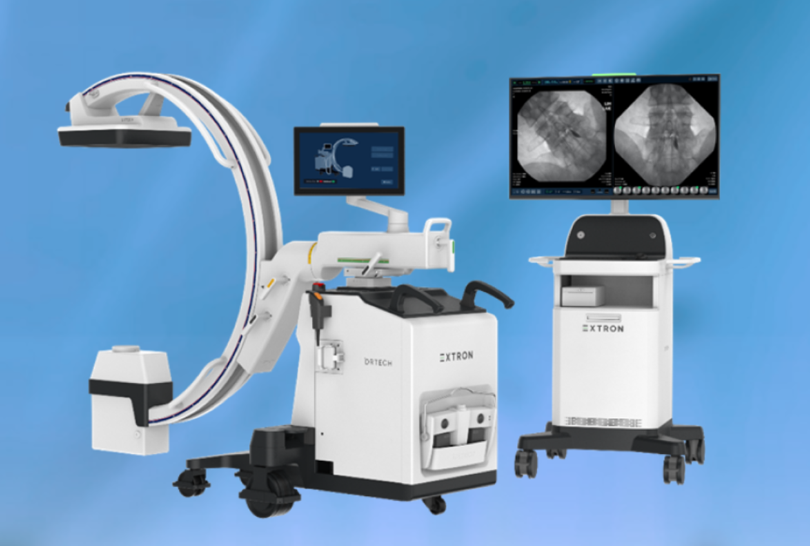
Modern C-Arm systems increasingly incorporate workflow-focused design elements that help reduce these inefficiencies, including:
- Intuitive user interfaces that reduce setup time
- Preset positions and smart memory features
- Improved maneuverability in tight spaces
- Faster image response and stabilization
When clinicians can position the system quickly and see what they need the first time, retakes decrease—and so does cumulative dose.
Behavioral Dose Reduction
One of the most important shifts in imaging design is the move toward behavioral dose reduction—systems that encourage safer imaging habits naturally.
Features such as real-time noise reduction, better collimation tools, and consistent image quality at lower exposure levels reduce the temptation to “turn up the dose” to compensate for poor visualization.
In this way, workflow and technology work together to support safer imaging without placing additional cognitive burden on clinicians.
Why This Matters for Facilities
Facilities evaluating C-Arm systems—whether new or refurbished—are increasingly recognizing that:
- Radiation management must be sustainable
- Safety must be built into daily workflow
- Technology should reduce reliance on manual correction
Workflow-driven dose reduction supports not only patient safety, but also long-term staff well-being, efficiency, and consistency of care.
Pulse ISM’s Approach
At Pulse ISM, we evaluate C-Arm solutions through a practical lens: how the system performs in real environments, with real staffing constraints, and real procedural demands.
By aligning imaging technology with workflow realities, we help facilities select systems that support safer imaging behavior naturally—day after day.
Looking Ahead
Radiation management will continue to shape how facilities approach C-Arm imaging. Those that prioritize workflow-driven design alongside technical capability will be best positioned to reduce dose, improve efficiency, and support long-term sustainability.
📧
info@pulseism.com
🌐www.PulseISM.com